

Lessons from the Field (and Court)
By Josh Throckmorton
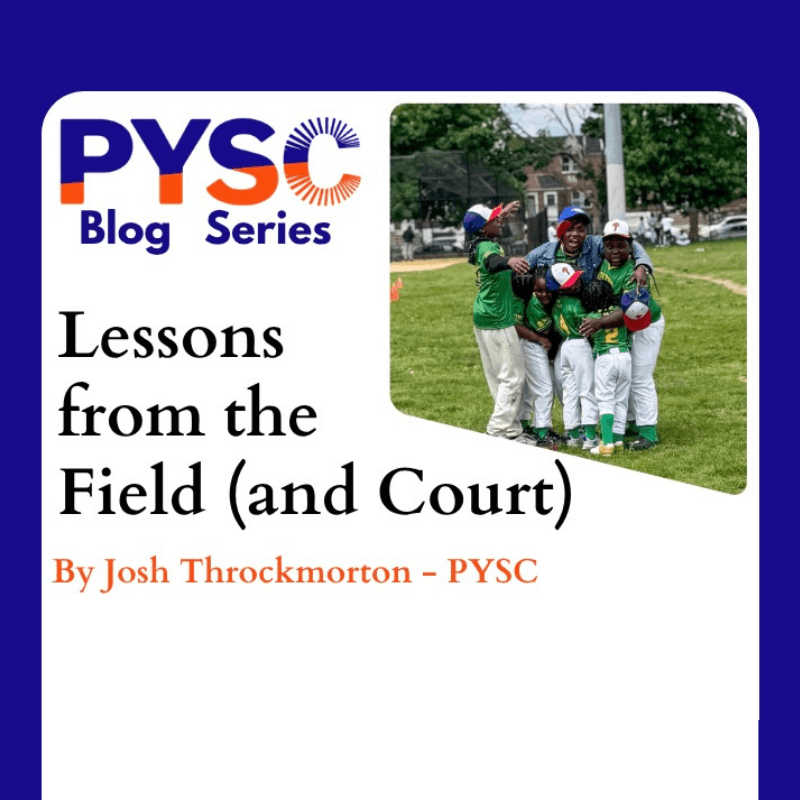
Over the past several months, PYSC has partnered with Philadelphia Parks & Recreation to design and test models for accessible recreational sports programming across the city. These efforts—most recently the Octavius Catto Youth Baseball League and Red Ball Tennis—have united institutional partners (the Philadelphia Phillies and U.S. Tennis Association), PYSC members (The On Deck Circle, Anderson Monarchs, Mt. Airy Baseball, and Legacy Tennis), and city employees around a common goal: to learn how to work together to provide young Philadelphians and their families with safe, inclusive, and engaging opportunities to build positive, meaningful relationships through sports.
With spring seasons now behind us and planning for fall soccer programming in full swing, we figured now’s the time to step back and reflect on what we’ve learned so far. Here are our big takeaways:
1) Families want their kids to try new activities but are sometimes wary of the “intensity” of the youth sports.
This spring, 75% of Catto League ballplayers and 88% of Red Ball Tennis program participants tried their sport for the first time. Feedback from parents and guardians registering their kids was consistent: these opportunities were appealing because they were local (at their neighborhood rec centers), affordable (pay-what-you-can, up to $40), and didn’t require a huge time commitment (1-3 days per week of no more than 75 minutes at the field or court). One Red Ball Tennis parent echoed the sentiments of others who responded to our post-season surveys when they said, “Since my child is young and doesn't yet know what he likes, I liked that the season was relatively short, financially accessible, and helped teach him the fundamentals.”
2) Philadelphia Parks & Rec staff want to lead programming and will do a great job when given the resources to do so.
Similar to the young athletes, the Philadelphia Parks & Rec staff members who raised their hands to participate in these programs were new to their sports, too: 70% of Catto League coaches and 89% of Red Ball Tennis coaches reported that they had never coached—or even played—their sport before the season. To make coaching accessible, PYSC and our strategic partners at Parks & Rec, the Philadelphia Phillies, and the U.S. Tennis Association designed a coach development process to intentionally onboard coaches to their sport and empower them to take ownership of their programs. Together, we provided equipment and apparel, administrative processes, communication templates, in-person and online training, practice curriculum, and feedback to guide their learning. One Catto League coach wrote at the end of the season: “I honestly didn’t think I could coach, although it’s something I always wanted to do…I loved what this coaching experience has done for me as a whole. It even gave me more confidence at bringing different programs into the recreation center.”
Surveys collected from parents and guardians suggest the coach development model was a smashing success (tennis pun intended). 100% of Catto League families and 100% of Red Ball Tennis families who responded to mid- and post-season feedback forms reported that their child had a positive experience with their coach – and a combined 96% of families said they’d register for another program led by their Parks & Rec coaches.
3) Philly is proud of its communities and loves showing it.
While we know Philadelphians love showing their pride in their sports teams, we admittedly didn’t anticipate just how deeply connected to their children’s teams the Catto League and Red Ball Tennis families would be. Across both programs, we saw coaches and families of young athletes print custom t-shirts and hats celebrating their rec center; design team logos and print stickers for their kids; and bring balloons in their team’s colors to community play days. This reinforced the importance of providing center-specific team colors and clothing to kids and their families, a lesson we’ll carry forward by allocating more resources towards apparel in the upcoming soccer season.
4) It’s not that expensive to fund affordable, well-resourced entry-level youth sports programming.
While we acknowledge that both the Catto League and Red Ball Tennis program received free access to field and court space, web hosting services, participant registration software, t-shirts, training curriculum, and dedicated staff time from our partners, big picture, neither program was particularly expensive to run. To train nearly 40 Philadelphia Parks & Recreation coaches to provide more than 250 young Philadelphians at 15 rec centers with 8+ weeks of entry-level sports programming, PYSC spent less than $50,000 on equipment, apparel, training contracts, child safety measures, data collection services, program management technology, and end-of-season program celebrations. If local proponents of youth sports want to fund thoughtfully planned, community-based programming, they can…without draining their personal, corporate, or government bank account.
These lessons are already shaping how PYSC, Philadelphia Parks & Recreation, and our partners work together to create new opportunities for Philly’s youth to try sports in their communities across the city. As we continue this work, we’ll keep listening, learning, and building models that make youth sports more accessible, welcoming, and sustainable for every Philadelphia neighborhood.

Philadelphia Youth Sports Collaborative Recognizes Excellence in Philly Sports
The Philadelphia Youth Sports Collaborative is a citywide nonprofit dedicated to strengthening youth sports providers through advocacy, convening and strategic investment. Through initiatives such as the Philly Youth Sports Fund, PYSC supports neighborhood-based programs that expand equitable access to sports and positive youth development opportunities.
Carrying on the Legacy
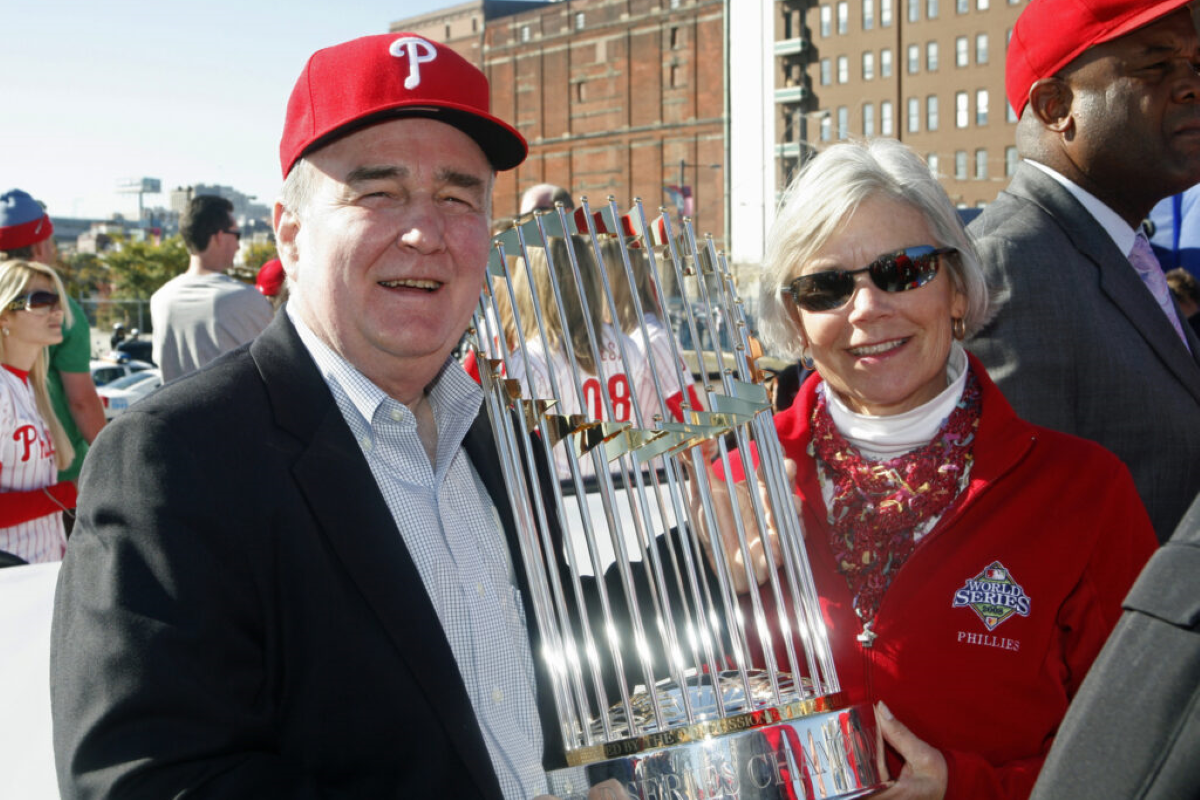
Once named solely for John Wanamaker, this prestigious award, established in 1961, is given annually to an athlete, team or organization that makes Philly proud. As part of the transition, PYSC honors the award’s legacy by creating the new Montgomery-Wanamaker Award. This award is an ode to both John Wanamaker and former Phillies chairman David P. Montgomery. Montgomery played a pivotal role in preserving the Wanamaker Award. A steadfast advocate for youth sports across Philadelphia, his impact goes beyond wins and losses. Before he died in 2019, Montgomery was a civic force who helped strengthen local communities.
The newly dubbed Montgomery-Wanamaker Citizen Award honors individuals whose influence extends beyond athletic achievement and impacts the city. “We are deeply honored that PHL Sports has entrusted us to carry this legacy forward,” says Beth Devine, executive director of the Philadelphia Youth Sports Collaborative. “The Montgomery-Wanamaker Award represents the very best of Philadelphia sports leadership. By connecting this historic tradition to direct investment in youth sports, we are honoring our past while building opportunity for the next generation.”
Honoree Jordan Mailata
Part of that next generation is the 2026 recipient of the honor: Philadelphia Eagles offensive tackle Jordan Mailata. Since arriving in Philadelphia in 2018, Mailata has made major efforts to contribute to youth sports. He invests time and resources in youth initiatives, participates in outreach across neighborhoods and supports charitable efforts throughout the region. His sustained engagement with young people reflects the values at the heart of this award. Mailata’s selection reinforces the award’s renewed focus on athletes who embrace representing Philadelphia.
Preventing youth violence in Philadelphia takes center stage at town hall for coaches, leaders, advocates
Organizers said the event was designed to go beyond presentations, giving attendees a chance to collaborate, network and share ideas. Participants identified barriers facing youth organizations — including limited funding, a need for more training, and gaps in support for young people transitioning into adulthood. Attendees also used their phones to vote on which solutions could have the most impact in the next six months.
Police Athletic League Executive Director Erica Vanstone said that kind of feedback is critical.
"We said, let's just sit down and figure out how we can collaborate around what our pressing needs are, what the biggest problems are, and how we could move forward together," Vanstone said.
Coaches and program leaders described how challenges in the community often follow young people onto the field.
"We know that so many teenagers now are getting caught up in so much mishap out in the streets," said Marc Bredell, a coach with the City Youth Association Gators. "So just changing the culture of that age group in the city."
Others emphasized the importance of addressing those issues beyond athletics.
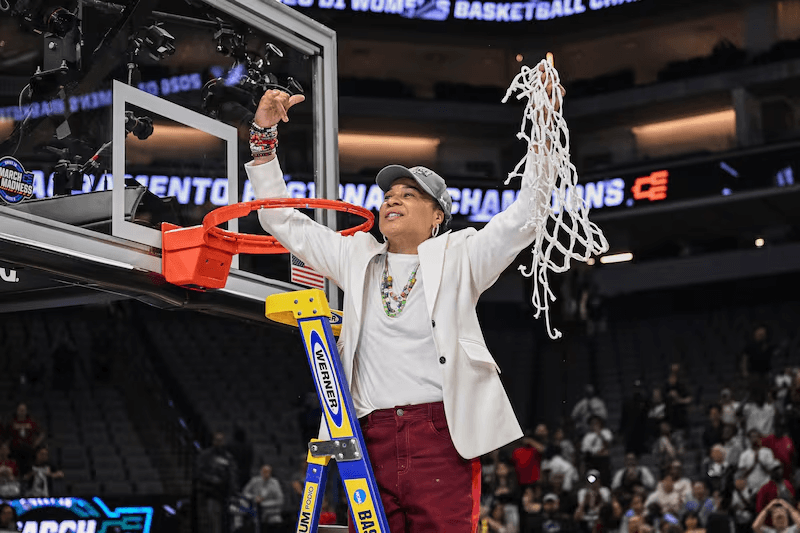
A Philly youth sports organization is creating an award named for Dawn Staley
The award's first winners are the women's basketball coaches of the Big 5: Diane Richardson, Mountain MacGillivray, Denise Dillon, Cindy Griffin, Mike McLaughlin, and Amy Mallon.
North Philly native Dawn Staley is getting a little more love from her hometown.
The Philadelphia Youth Sports Collaborative this week announced the creation of the Dawn Staley Legacy Award.
The award was created to honor those who have shown strong leadership and have made an impact on expanding basketball within the community, especially for women and girls, according to a news release. The award is meant to showcase Staley’s impact on women’s basketball on the court and in the community.
It will be presented at the Philadelphia Sports Legacy Honors on May 20 at the Alan Horwitz “Sixth Man” Center. The inaugural winners of the award are the head coaches of the Big 5 women’s basketball teams: Diane Richardson (Temple), Mountain MacGillivray (La Salle), Denise Dillon (Villanova), Cindy Griffin (St. Joseph’s), Mike McLaughlin (Penn), and Amy Mallon (Drexel).
“Dawn Staley’s impact goes far beyond wins and championships,” Beth Devine, executive director of the PYSC, said in the release. “She has changed what is possible for women in sports and continues to inspire the next generation. It is only fitting that the first recipients of this award are the coaches who are carrying that work forward right here in Philadelphia.”
Staley coached the Temple women from 2000-08, leading the program to six NCAA Tournament appearances. She has coached at South Carolina since 2009 and has won three national championships.
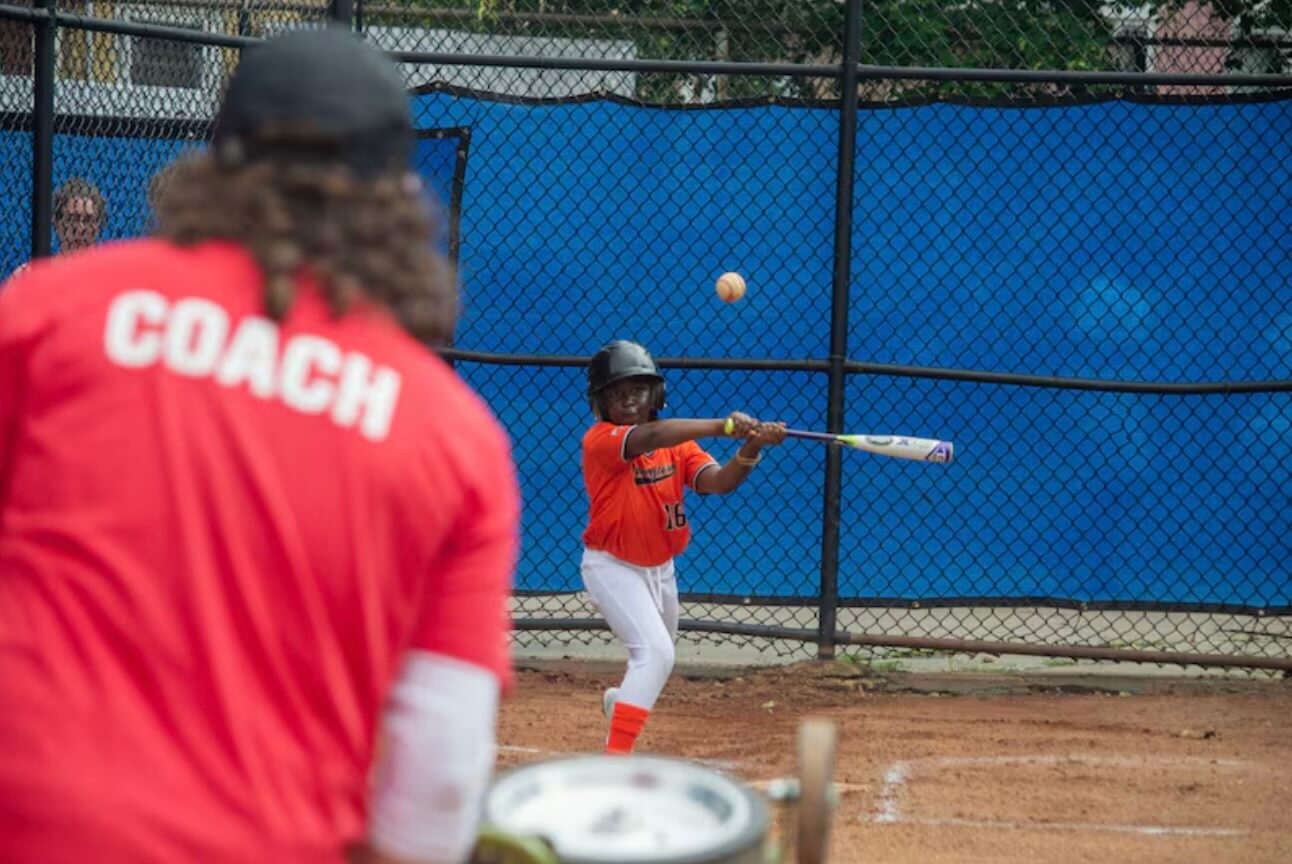
Philly wants more community sports programs for kids. What’s lacking? Dedicated coaches.
As more kids increasingly flock to for-profit programs, community coaches are disappearing. A trend the city hopes to reverse by partnering with programs training teens to become the next generation.
The Octavius Catto Baseball League was founded in 2025 to provide entry-level baseball opportunities for youth ages 6-12. The city says it needs more coaches in leagues like this to combat kids going to for-profit organizations.
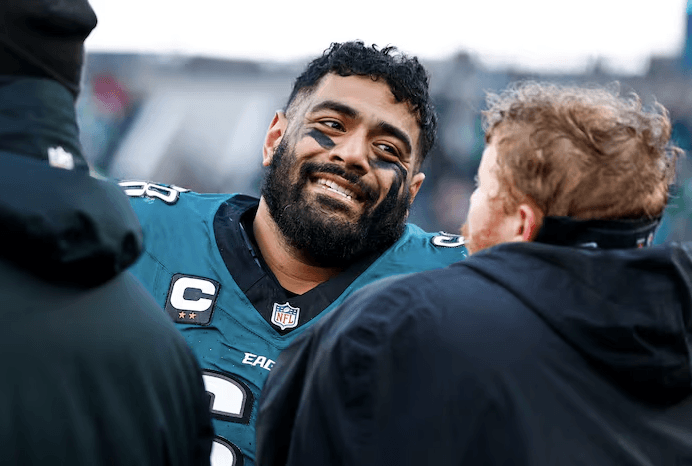
Philadelphia Eagles’ Jordan Mailata Named 2026 Montgomery-Wanamaker Citizen Award Recipient
FOR IMMEDIATE RELEASE
Philadelphia Eagles’ Jordan Mailata Named 2026
Montgomery-Wanamaker Citizen Award Recipient
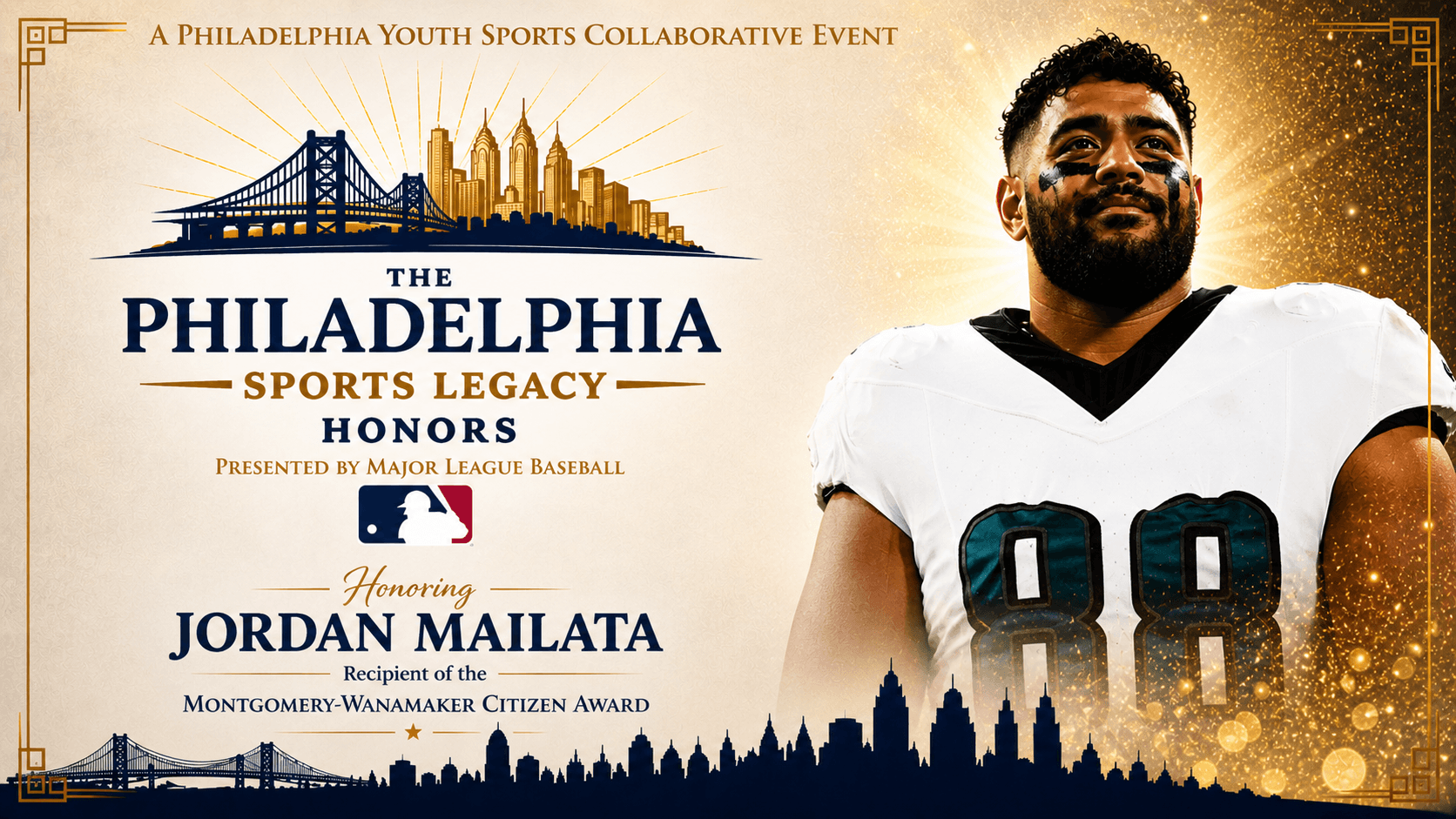
PHILADELPHIA (March 10, 2026)— The Philadelphia Youth Sports Collaborative today named Philadelphia Eagles offensive tackle Jordan Mailata the 2026 Montgomery-Wanamaker Citizen Award recipient, marking a new chapter for one of the city’s most historic civic sports honors.
PYSC will present the award May 20, 2026, at the Philadelphia Sports Legacy Honors at the Alan Horwitz “Sixth Man” Center. The formal celebration will bring together leaders from professional sports, business, philanthropy and civic life to recognize excellence rooted in character, leadership and service.
The Montgomery-Wanamaker Citizen Award honors individuals whose influence extends beyond athletic achievement to measurable civic impact in Philadelphia. Mailata’s selection reinforces the award’s renewed focus on athletes who embrace the responsibility that comes with representing the city.
Since arriving in Philadelphia, Mailata has invested time and resources in youth initiatives, participated in outreach across neighborhoods and supported charitable efforts throughout the region. His sustained engagement with young people reflects the values at the heart of the award.
“Jordan embodies what this award stands for,” said Beth Devine, executive director of the Philadelphia Youth Sports Collaborative. “His leadership extends far beyond the field. He has shown up for young people, for neighborhoods and for this city. As we carry this tradition forward, Jordan represents the standard of service and integrity we seek to honor.”
Mailata said the recognition reflects the responsibility he feels representing Philadelphia.
“Philadelphia has given me so much — belief, support and a sense of home,” Mailata said. “To be recognized in the name of leaders who helped shape this city means a great deal to me. I’ve always felt that representing Philadelphia comes with responsibility, especially to young people watching. If I can play a small part in helping them see what’s possible, that’s what matters most.”
The Philadelphia Sports Legacy Honors celebrates civic leadership in sport while directing that legacy forward. Proceeds from the event will support the Philly Youth Sports Fund, a grantmaking initiative that invests directly in neighborhood-based youth sports organizations across the city and expands access to opportunity, mentorship and safe places to play.
Additional program details and ticket information will be announced in the coming weeks.
Media Contact:
Steven Giannino-Malatesta, PhD
Director of Communications
Philadelphia Youth Sports Collaborative
sgiannino@pysc.org
609-922-0059
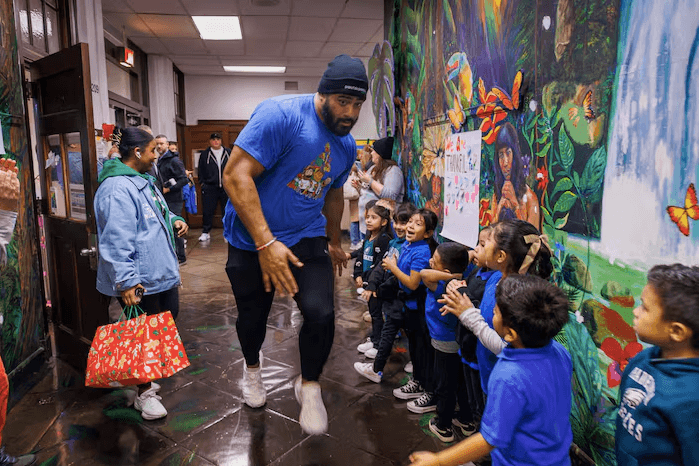
Jordan Mailata wins first Montgomery-Wanamaker Citizens Award, which now bears the name of the late Phillies chairman
After 65 years of honoring athletes, organizations, and teams for their on-field success, the John Wanamaker Athletic Award is entering its next chapter — and it’s bringing a new legacy with it.
The newly renamed Montgomery-Wanamaker Citizens Award pays tribute to both Wanamaker and former Phillies president, the late David Montgomery.
As part of the change, the award — which was previously presented to “the athlete, team or organization which has done the most to reflect credit upon Philadelphia and to the team or sport in which they excel” — will now focus more on athletes’ off-field accomplishments. It will honor recipients’ work in their communities and their love for the city.
This year, that’s Jordan Mailata. The Eagles offensive tackle will be the first to receive the Montgomery-Wanamaker Citizens Award, in recognition of his work with The Philly Specials.

From Childhood Dreams to World Cup Reality: How Soccer Shapes Our Community
By Melissa Piccoli
There's a photo somewhere in my mom's house that perfectly captures the beautiful chaos of youth soccer: a dozen kids in oversized jerseys chasing a ball across the field, no strategy, no positions, just pure joy. I'm in there somewhere, probably with grass stains on my knees and the biggest smile on my face. Back then, I had no idea I was experiencing something that would shape not just my childhood, but eventually my career.
I don't play soccer anymore. In my adult life, my relationship with the game has mostly been cheering on the U.S. Women's National Team. But there was a time when soccer was everything to me, and looking back now, I realize just how deeply it shaped my childhood in ways I didn't fully appreciate until much later.
As a kid, soccer quickly became the center of my universe. It was how I made new friends, what I looked forward to after school, and what gave structure to my weekends. But it was more than just a sport. During some of the more difficult moments in my life, soccer wasn't just an outlet. It was a support system that taught me about teamwork, resilience, and the value of showing up and working hard.
Fast forward to today, and I find myself reconnected with that beautiful game in the most incredible way. Two years ago, I joined Philadelphia Soccer 2026 (PS2026), the local host committee tasked with planning and delivering FIFA World Cup 26™ right here in Philadelphia. Suddenly, that little kid chasing the ball had a front row seat to helping bring the world's biggest sporting event home.
In 2026, Philadelphia will host six World Cup matches at Lincoln Financial Field and the FIFA Fan Festival™ at Lemon Hill in Fairmount Park, a free celebration where families can come together to experience the magic of the tournament. But here's what excites me most. This isn't just about 40 days of incredible soccer. It's about using this global spotlight to amplify the amazing work already happening in our youth sports community.
Being part of PS2026 has shown me firsthand how powerful our soccer community is. I've watched organizations across Pennsylvania, including PYSC, use the beautiful game as a tool to enhance young people's wellbeing, build bridges across different backgrounds, and create opportunities where none existed before. The World Cup gives us a megaphone to celebrate and expand that impact.
Through our partnership with the U.S. Soccer Foundation, we're committed to creating lasting change across the Commonwealth. We're building safe places to play, implementing programs like Coach Mentor Training and Soccer for Success, and establishing a legacy endowment for Eastern Pennsylvania Youth Soccer and PA West Soccer that will honor the World Cup's spirit long after the final whistle.
That chaotic photo from my childhood represents something beautiful. It captures the moment when a simple game becomes a gateway to friendship, growth, and community. In 2026, when kids across our Commonwealth watch the world's best players take the field, some of them will have that same spark ignited.
The countdown to 2026 has begun, and we are ready to show the world what Philadelphia soccer is all about: passion, community, and the belief that every kid deserves a chance to chase their dreams across the field.

New study finds access to youth sports is unequal in Philadelphia. The city looks to change that.
Before the first pitch is thrown, Tyrone Young arrives early to the baseball field at Hunting Park to pick up trash in both dugouts where teenagers gather to play in North Philadelphia’s Heritage Baseball League.
The trash is what he can control. What he can’t fix are the deep holes on the base paths that make it nearly impossible to play when it rains. He believes race has something to do with the condition of his field.
“Certain fields you might go in the Northeast ... their fields are immaculate, but why do ours not look like that?” said Young, who founded the league in 2008.

New Study shows inequality in funding of city recreation programs
A new study has found that sports facilities in Philadelphia neighborhoods with higher percentages of white residents tend to be of higher quality than those in areas with fewer white residents.
The study, conducted by Temple University’s School of Sport, Tourism and Hospitality Management, began in 2023 and observed 1,400 sports facilities across the city that are managed by Philadelphia Parks and Recreation.
Its findings were stark: White neighborhoods had better quality sports facilities, more sports fields, and more permitted sports.
“Moving forward, we know that a larger investment is needed.” said Dontae Privette, the Director of Community Engagement, at Philadelphia Youth Sports Collaborative. He says that in affluent neighborhoods, recreation programs rely on volunteer support and resources but in lower income neighborhoods working parents may not have the time.